What Time Do Hot Air Balloons Fly in Cappadocia? Sunrise Schedules Across the Year
Cappadocia balloons fly in a single window each morning, tied to sunrise, with a two-wave operation that most travelers never hear about until they are already in the basket. This is the operational picture, month by month.
Hot Air Cappadocia Balloon Operations Team
Göreme, Cappadocia · TURSAB 2290 · Since 1999
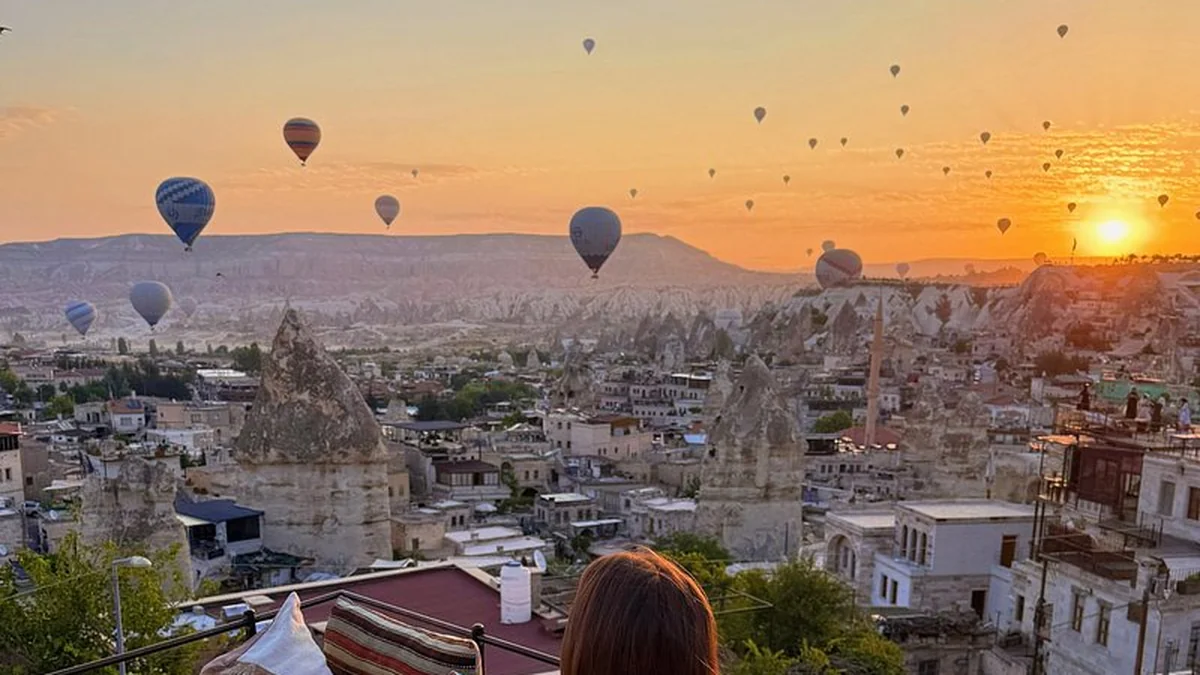
The most common question we receive in the days before a Cappadocia balloon flight is some version of "what time will I actually be in the air?" It sounds simple, and the answer is more interesting than it looks: Cappadocia ballooning is a sunrise-only operation, but the exact takeoff time changes by roughly two and a half hours across the year, and the operation itself runs in two distinct waves separated by about thirty minutes.
This guide walks through the actual sunrise schedule month by month, how pickup times are calculated from your hotel location, what the two-wave system means for what you will see, and the operational rhythm that produces those iconic morning skies. Every chart in this article is built on real Nevsehir coordinates and the operational practice we have been running since 1999.
Bigger picture: Planning Your Cappadocia Trip
The short answer
Hot air balloons in Cappadocia fly exclusively at sunrise. There are no afternoon flights, no evening flights, and no sunset balloon operations in the region. The exact takeoff time shifts with the sunrise across the year: in midsummer the first balloons lift off around 04:30, in midwinter around 07:00 to 07:30.
On most mornings the operation runs in two waves. The first wave lifts off about 30 minutes before sunrise, in the dark, and meets the sunrise already in the air. The second wave lifts off roughly 30 minutes later, if the Civil Aviation Authority confirms conditions are still suitable, and flies with the sky already lit.
From your hotel pickup to your drop-off at the end of the morning, the full experience is approximately 3 hours, though it can run longer if the Civil Aviation Authority extends the wait at the launch field for wind conditions to settle. There is no "express" version of this and no shortcuts: ballooning is structured around the wind, the sun and the regulator, not around guest schedules.
Why Cappadocia balloons only fly at sunrise
The sunrise-only schedule is not a marketing choice or a tradition. It is an aviation requirement, driven by three physical factors that all converge in the same narrow window each morning.
First, surface winds in Cappadocia are at their calmest in the hour before sunrise. As the sun warms the ground, thermal currents start to develop, and surface winds become unpredictable, particularly in the volcanic valley landscape with its irregular terrain. Sunrise is the last reliable window where the air column is stable enough for safe balloon operation. By 09:00 in most months, the air is already too unsettled for passenger flights.
Second, the regulator restricts commercial balloon flights to the sunrise window. Surface wind limits enforced by the Sivil Havacılık Genel Müdürlüğü (SHGM), Turkey's civil aviation authority, prevent passenger flights when ground wind exceeds 10 knots at the launch point. That threshold is most reliably met in the pre-sunrise to early post-sunrise window.
Third, the visual experience itself is built for sunrise. The golden light catching the fairy chimneys, the gradient of color spreading across the valley, the silhouettes of dozens of balloons against the sky: this is the photograph everyone has seen of Cappadocia, and it only exists at sunrise. Even if regulations and physics allowed afternoon flights, no operator would run them, because nobody would book them.
This is also why Cappadocia has no sunset balloon flights. The evening atmospheric profile is the opposite of the morning one: residual thermal activity from a day of solar heating, weaker thermal stability, and unpredictable wind shifts that make safe ballooning impractical. Sunset balloon flights do not exist as a commercial product in the region.
The two-wave system most travelers don't know about
When you see photographs of 100 or more balloons in the Cappadocia sky at once, you are usually seeing the moment when the first wave is just catching the sunrise and the second wave is in the process of lifting off. This is not a coincidence. Cappadocia operates in two distinct sequential waves on most flight mornings.
The first wave lifts off approximately 30 minutes before sunrise, in the dark. The pre-flight inflation happens by floodlight at the launch field; the moment you are airborne, the sky is still the deep blue of pre-dawn. As the balloon climbs, you watch the sunrise unfold from above, with the light progressively catching the valley walls below you. By the time you land, the entire landscape is already lit.
The second wave lifts off about 30 minutes after the first, only if the Civil Aviation Authority and the operator confirm conditions have remained suitable for that interval. Surface winds in Cappadocia can shift quickly in the post-sunrise window, so the second wave is not guaranteed: it depends on the morning. When it operates, the sky is already lit at takeoff, and the experience is more about flying with the spectacle around you, dozens of other balloons already in the air at multiple altitudes.
You do not choose which wave you fly in. The wave is assigned operationally, based on the operator's schedule, basket availability and the morning's capacity allocation. What matters for your experience is to understand both waves are visually extraordinary in different ways. The first wave is more dramatic because the sky transforms during your flight; the second wave is more theatrical because you fly inside the spectacle of dozens of other balloons that already lifted off.
If you are a photography-driven guest who wants the most dramatic light, the first wave is generally the stronger experience. If you are a guest who wants to see the maximum number of balloons in the sky around you, the second wave often delivers that. Both are real Cappadocia.
How pickup times are calculated
Your pickup time is not arbitrary. It is reverse-engineered from sunrise, working backwards through a sequence of fixed operational steps. The math is simple once you see it.
Starting from the first wave takeoff (sunrise minus 30 minutes), the operator needs roughly 30 to 40 minutes of pre-flight ground time at the launch field: arrival, safety briefing, basket entry, balloon inflation. That puts arrival at the launch field at sunrise minus 60 to 70 minutes. To that, add the transfer time from your hotel to the launch field. The launch field can change morning by morning based on wind direction, but transfer times are roughly consistent by area.
For most hotel locations, this calculation produces a pickup time about 1 to 1.5 hours before sunrise. In midsummer, when sunrise is at 04:58, pickup typically falls between 03:30 and 04:00. In midwinter, when sunrise is at 07:30, pickup typically falls between 06:30 and 07:00.
Pickup times are confirmed for the next morning the evening before, by 18:00, after the next day's flight area suitability and operational planning are complete. The confirmation email you receive includes your specific pickup time, the operator name, and the pickup window. Until that email arrives, the previous day's placeholder time is just an estimate.
Month-by-month sunrise schedule (Cappadocia / Nevsehir)
Cappadocia uses fixed UTC+3 year-round; Turkey has not observed daylight saving time since 2016, so there are no clock changes between summer and winter. This makes the sunrise schedule easier to plan than in most European destinations, where DST shifts complicate the picture.
These are the typical sunrise times for Nevsehir, measured on the 15th of each month, with the corresponding typical first-wave takeoff window and pickup time range. The pickup column shows a range because it depends on your hotel location; the takeoff column reflects the start of the first wave, with the second wave (when operating) following roughly 30 minutes later.
- January: sunrise 07:24 · first-wave takeoff 06:54 · typical pickup 06:00 to 06:30
- February: sunrise 07:02 · first-wave takeoff 06:32 · typical pickup 05:30 to 06:00
- March: sunrise 06:24 · first-wave takeoff 05:54 · typical pickup 05:00 to 05:15
- April: sunrise 05:38 · first-wave takeoff 05:08 · typical pickup 04:15 to 04:30
- May: sunrise 05:08 · first-wave takeoff 04:38 · typical pickup 03:45 to 04:00
- June: sunrise 04:58 · first-wave takeoff 04:28 · typical pickup 03:30 to 03:45
- July: sunrise 05:14 · first-wave takeoff 04:44 · typical pickup 03:45 to 04:00
- August: sunrise 05:39 · first-wave takeoff 05:09 · typical pickup 04:00 to 04:15
- September: sunrise 06:05 · first-wave takeoff 05:35 · typical pickup 04:30 to 04:45
- October: sunrise 06:31 · first-wave takeoff 06:01 · typical pickup 05:00 to 05:15
- November: sunrise 07:03 · first-wave takeoff 06:33 · typical pickup 05:45 to 06:00
- December: sunrise 07:30 · first-wave takeoff 07:00 · typical pickup 06:15 to 06:30
These are typical values for the middle of each month. Actual sunrise drifts by a few minutes each day, so a flight on June 1 versus June 30 will have a slightly different time, but the schedule never changes dramatically inside a single month. The pickup window range reflects the variation across hotel locations, covered in the next section.
Pickup time by hotel area
The pickup time you are given depends on where you are staying. Hotels closer to the launch field have later pickup times; hotels further away have earlier pickup times, since the transfer absorbs the extra buffer. Cappadocia balloon launch fields are typically clustered around Göreme and the surrounding valleys, so your pickup time is essentially a function of how far from that cluster your hotel is.
These are the typical transfer times for the main hotel areas:
- Göreme village: approximately 10 minutes to the launch field. This is the closest hotel cluster and yields the latest pickup time relative to sunrise.
- Çavuşin, Üçhisar and Uchisar village: approximately 15 minutes to the launch field. Pickup is shifted earlier by 5 minutes compared to Göreme.
- Ortahisar and Avanos: approximately 15 to 20 minutes to the launch field. Pickup is shifted earlier by 5 to 10 minutes compared to Göreme.
- Ürgüp: approximately 15 minutes to the launch field. Comparable to Çavuşin or Uchisar.
- Nevşehir city center: approximately 20 to 25 minutes to the launch field. Pickup is shifted earlier by 10 to 15 minutes compared to Göreme.
These ranges assume a typical morning with normal traffic, which is essentially zero at 04:00 to 06:00. Variation comes mainly from the launch field assignment, which depends on the morning's wind direction. The operator handles all of that. From your side, the practical implication is simple: choose your accommodation cluster, expect the pickup window described in your booking confirmation, and be ready in the lobby 5 to 10 minutes before the time given.
The full morning timeline (typically about 3 hours)
From the moment your driver arrives at your hotel to the moment you are dropped back, the full morning is structured as a sequence of fixed steps. The total runs to approximately 3 hours in normal operation, though it can extend if the Civil Aviation Authority adds wait time at the launch field for wind conditions.
Step by step, a typical morning unfolds like this:
- Pickup at your hotel by a private or shared transfer (5 to 10 minutes earlier than the time given is the right discipline).
- Transfer to the launch field (10 to 25 minutes depending on your hotel area).
- Arrival at the launch field, brief breakfast service at the operator's pavilion (coffee, tea, pastry; light, designed for an empty morning stomach).
- Pre-flight safety briefing from the pilot, covering basket entry, in-flight behavior, the landing position and emergency procedures (15 to 20 minutes).
- Balloon inflation: the fabric envelope is laid out, cold-inflated with industrial fans, then heat-inflated with the burner. Guests usually watch this from a few meters away, behind a perimeter line.
- Basket entry: the pilot calls guests in, organizes them by basket compartment, performs final equipment checks.
- Takeoff: first wave around sunrise minus 30 minutes; second wave around sunrise (when operating).
- Flight: approximately 60 minutes in the air, with the pilot adjusting altitude to find favorable wind directions and to fly low into the valleys when conditions allow.
- Landing in an open field, often kilometers from the takeoff point, with the chase truck already in position.
- Champagne ceremony and personalized flight certificates handed to each guest by the pilot.
- Transfer back to your hotel (15 to 25 minutes depending on landing location and hotel area).
On a normal morning, this entire sequence resolves within 3 hours. On mornings when the regulator extends the launch window because of marginal wind conditions, the wait at the launch field can add 30 to 60 minutes before takeoff, which extends the total. This is uncommon but not rare, and it is the reason we ask guests to leave the rest of the morning unscheduled.
When the Civil Aviation Authority extends the wait
On some mornings, particularly in spring and autumn shoulder seasons, the Civil Aviation Authority opens the flight area but instructs operators to delay takeoff until surface winds drop below the regulatory limit. From the guest's perspective, this means you arrive at the launch field at the expected time, but the inflation does not begin immediately. You wait, often with the pilots and ground crew, sometimes for 30 to 60 minutes, until the wind cooperates.
This is a feature of the system, not a failure of it. The alternative would be to take off in marginal conditions or to cancel the flight entirely. Extending the wait is the conservative choice that allows the flight to proceed safely. When the wind drops to the operational threshold, the inflation begins, and the rest of the morning unfolds as planned.
In practice this means two things for guests. First, do not schedule a tight breakfast or transfer for immediately after your expected drop-off time. Leave the morning open until at least 09:30 or 10:00, even if your booked program would normally finish by 08:30. Second, trust the wait. Pilots and operators are not testing your patience; they are following the only operational logic that produces a safe flight on a marginal morning.
What guests get wrong about timing
A few timing-related misconceptions come up regularly, and they are worth correcting before they affect your trip planning.
There is no afternoon balloon flight in Cappadocia. Some travelers ask whether they can do an afternoon balloon flight to fit a morning Goreme Open Air Museum tour first. The answer is no: ballooning is exclusively a sunrise operation, and the morning museum tour would have to be moved to a different day. We recommend booking the balloon flight on your first full morning in Cappadocia, so any weather cancellation has time to reschedule before you leave.
There is no late-morning option for travelers who do not want to wake up early. The earliest you can be in the air is dictated by sunrise, not by your sleep schedule. If 03:30 pickup in midsummer feels too early, the practical solution is to plan a quiet afternoon and an early evening for the day before the flight, not to push the flight time later.
There is no in-flight extension. A Cappadocia balloon flight is approximately 60 minutes in the air. You cannot upgrade to a longer flight in the same basket: the duration is governed by fuel, weather, and operational scheduling. The 60-minute window is the standard across all licensed operators.
There is no flight-time guarantee on the morning of. Even with a confirmed booking and a confirmed pickup time, the final takeoff is decided at the launch field after the morning weather check. On rare mornings the flight is cancelled at the launch field after pickup. This is built into the regulatory framework and is not unique to any single operator.
The honest summary
Hot air balloons in Cappadocia fly at sunrise, in a single morning window, operated in two waves separated by about 30 minutes. The exact clock time varies from approximately 04:30 in midsummer to approximately 07:30 in midwinter, with pickup roughly one to one-and-a-half hours before sunrise. The full guest experience from pickup to drop-off is approximately 3 hours.
Every part of this schedule is anchored to physical and regulatory constraints, not commercial flexibility. There are no afternoon flights, no sunset operations, no late-morning options. The first wave takes off in the dark and meets sunrise from the air; the second wave takes off into already-lit sky and flies inside the spectacle of dozens of other balloons.
If you are planning your trip around your balloon flight, give yourself two practical buffers: pick a Cappadocia morning early in your stay (so a weather cancellation has rescheduling room), and leave the rest of that morning unscheduled (so a wait at the launch field does not collide with another booking). The mornings the operation cooperates fully, you will be back at your hotel by 08:30 to 09:30 and the day is still open. The mornings the wait extends, you will not regret the buffer.
Book your Cappadocia sunrise flight
Pick the experience that fits you.
ClassicShared basket, the classic sunrise over the valleysComfortA smaller group, more room to move and to photographPrivateYour own balloon, just your party, on your schedule Tour of Istanbul ↗Tour of Istanbul ↗
Continue reading
Frequently Asked Questions
- What time do hot air balloons fly in Cappadocia?
- Cappadocia balloons fly exclusively at sunrise, in a single morning window. The first wave lifts off approximately 30 minutes before sunrise; the second wave, when operating, follows about 30 minutes later. Takeoff times vary from approximately 04:30 in midsummer to approximately 07:00 in midwinter, anchored to sunrise.
- Why are there no afternoon or evening balloon flights in Cappadocia?
- Surface winds in Cappadocia are reliably calm only in the hour before and around sunrise. After 09:00 in most months, thermal activity destabilizes the air column and makes safe passenger ballooning impractical. The regulator restricts commercial balloon flights to the sunrise window for this reason, and no operator runs sunset or afternoon flights.
- What are the two waves and how do they differ?
- The first wave lifts off about 30 minutes before sunrise, in the dark, and meets the sunrise from the air. The second wave lifts off about 30 minutes later, only if the Civil Aviation Authority confirms conditions remain suitable. The first wave is more dramatic because the sky transforms during the flight; the second wave flies inside the spectacle of dozens of other balloons already in the air.
- What time will my pickup be?
- Your pickup time is typically 1 to 1.5 hours before sunrise, calculated from your hotel's distance to the launch field and the operator's morning schedule. In midsummer that means approximately 03:30 to 04:00 for most Göreme-area hotels; in midwinter approximately 06:30 to 07:00. The confirmed pickup time arrives by email by 18:00 the day before your flight.
- How do summer and winter pickup times compare?
- The difference between midsummer and midwinter pickup is about 2.5 hours, because sunrise itself shifts by that much. June pickup is typically 03:30 to 04:00; December pickup is typically 06:30 to 07:00. Spring and autumn are intermediate, with March around 05:00 to 05:15 and October around 05:00 to 05:15.
- How long is the entire morning experience?
- From pickup to drop-off is typically about 3 hours: transfer to the launch field, briefing and inflation (about 45 to 60 minutes total ground time), 60 minutes in the air, plus the champagne ceremony, certificate and transfer back. Mornings when the Civil Aviation Authority extends the launch wait can run 30 to 60 minutes longer.
- Why are pickup times sometimes confirmed late?
- Pickup times are confirmed once the operator finalizes the next morning's launch plan, after weather assessment and capacity allocation. We send pickup confirmations by 18:00 the day before the flight, which is the standard across Cappadocia operators. Until that confirmation arrives, the previous day's estimate is a placeholder.
- Should I choose the first wave or the second wave?
- Guests do not choose; the wave is assigned operationally based on basket availability and morning capacity. If you have a strong preference, mention it at booking and we will note it for the operator, but final allocation is decided by the operator on the morning. Both waves deliver a real Cappadocia experience; they are visually different rather than better or worse.
- Will I still see the sunrise if I am on the first wave?
- Yes, and the first wave is generally the more dramatic version of seeing it. You lift off in the dark, and as you climb, the sunrise unfolds from your altitude with the valley walls catching the light progressively below you. The first wave does not miss the sunrise; it watches it from the best possible vantage point.
- What if the Civil Aviation Authority extends the wait that morning?
- You will wait at the launch field with the pilots and ground crew, usually 30 to 60 minutes, until surface winds drop below the regulatory limit. The breakfast service continues during the wait, and the flight then proceeds as planned. This is uncommon but not rare, particularly in spring and autumn shoulder seasons. The total morning runs longer than the typical 3 hours on these days.
- How early before pickup should I be ready in the lobby?
- 5 to 10 minutes before the time given is the right discipline. The driver does not wait long if guests are not ready, because the launch field operation has fixed timing windows that cannot be shifted by one party being late. Being ready early is the most important practical contribution to a smooth morning.
- Are there sunset balloon flights in Cappadocia?
- No. Sunset balloon flights do not exist as a commercial product in Cappadocia. The evening atmospheric profile is the opposite of the morning one, with residual thermal activity and unpredictable wind shifts that make safe ballooning impractical. The sunrise window is the only operationally and regulatorily valid time for commercial passenger ballooning in the region.
About the Author
The Hot Air Cappadocia Balloon Operations Team handles morning coordination, pickup scheduling, weather communication and post-flight follow-up for every booking we manage. The team operates from Göreme under Tayf Tours DMC (TURSAB licence 2290), in continuous operation since 1999, working with licensed Cappadocia balloon operators.