How Safe Are Hot Air Balloons in Cappadocia? What the Numbers Actually Say
Hot air ballooning in Cappadocia carries roughly 770,000 passengers a year across 236 flight days. That makes it one of the world's largest single ballooning operations, and also one of the most heavily regulated. Here is an honest look at the actual safety picture: the numbers, the regulatory oversight, the insurance, and the one safety contribution only you can make.
Hot Air Cappadocia Balloon Operations Team
Göreme, Cappadocia · TURSAB 2290 · Since 1999
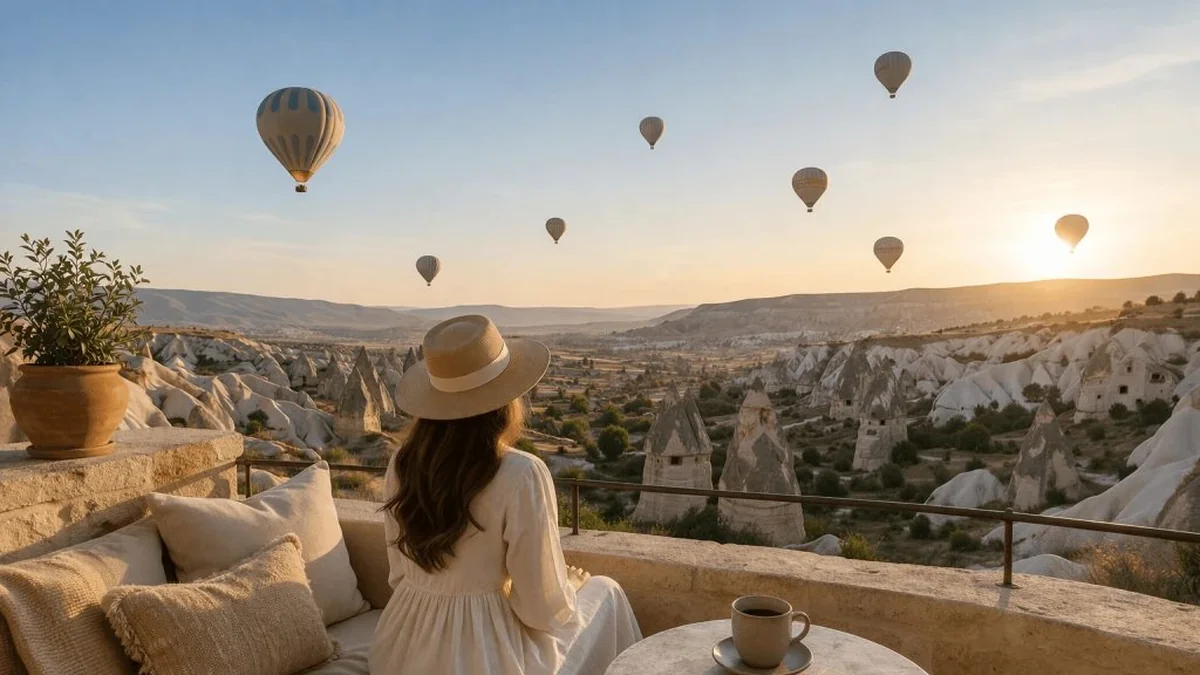
Almost every guest who books a flight with us has the same quiet question in the back of their mind, even if they do not always ask it out loud: is this actually safe? It is a fair question. A hot air balloon looks dramatic from the outside, with open flames, a wicker basket, no engine and no parachutes. The instinct to worry is reasonable. The honest answer requires looking at actual numbers and actual oversight rather than instinct alone.
Cappadocia is the busiest balloon destination in the world. The scale is not a marketing claim. In 2024 the region recorded 769,814 balloon passengers across 236 flight days, with up to 156 balloons aloft on a single morning. Around 30 licensed operators run those flights. Over the past decade, close to five million people have flown over these valleys at sunrise. That kind of operation is not possible without serious regulation; it is possible because of it.
We are not going to dismiss the safety question or wrap it in marketing language. Accidents have happened in Cappadocia, as they have in every aviation environment in the world. What this guide does is put those events into honest perspective, explain who is watching the sky every morning, show how the insurance and the licensing actually work, and tell you the one safety contribution that is genuinely in your hands as a passenger.
Bigger picture: Cappadocia Balloon Safety
The short answer
Yes, hot air ballooning in Cappadocia is operated as a regulated aviation activity, with multiple layers of protection that travelers rarely see from the outside. Roughly 770,000 people flew over the region in 2024 alone. About five million people have flown over the past decade. Ballooning, like any aviation activity, is not risk-free, but the operation is structured to reduce avoidable risk through licensing, weather restrictions, equipment standards, mandatory insurance and pre-flight briefings.
What makes the Cappadocia operation work safely is not a single feature; it is a layered system. The Turkish Civil Aviation Authority controls flight area suitability and weather conditions. Operators must be licensed and insured. Pilots hold commercial balloon licenses with accumulated flight hours measured in the thousands. Balloons undergo annual inspection. Passenger insurance is mandatory. None of these layers is optional. The operating company and the pilot in command also remain responsible for each individual flight, even when the flight area is open.
This guide walks through each of those layers, the honest picture of the operating environment, the one thing a guest can do to reduce their own risk, and how to choose an operator you can trust before you book.
Who actually regulates Cappadocia balloon flights
Many travelers assume that each balloon operator decides on their own when to fly, which pilots to hire, and how to maintain their equipment. That is not how it works.
Hot air ballooning in Cappadocia operates under direct oversight of the Sivil Havacılık Genel Müdürlüğü, the Turkish Directorate General of Civil Aviation, generally referred to by its abbreviation SHGM. The regional office that handles Cappadocia operations specifically is SHM Kapadokya. Commercial balloon flights in Cappadocia operate under Turkish civil aviation rules with specific operational requirements applied to balloon operators, pilots, aircraft and flight areas.
What SHGM mandates is not light-touch:
- Every balloon operator must be licensed. Around 30 licensed operators are currently authorized to fly in Cappadocia. Unlicensed flights are not permitted, and aviation authorities actively enforce this.
- Every commercial balloon pilot must hold a valid commercial balloon pilot license with logged flight hours that meet international minimums. Many experienced Cappadocia pilots have accumulated over 3,000 hours of region-specific flying.
- Every balloon must undergo annual airworthiness inspections and must carry mandatory safety equipment: a fire extinguisher, a first aid kit, a drop line, and GPS tracking.
- Every operator must carry passenger and third-party liability insurance. Operating without it is not a legal option.
- Surface wind conditions at the launch site must remain within regulatory limits; ground wind above 10 knots at the launch point, for example, prevents passenger flights from taking place.
When you see 156 balloons rising in formation at sunrise over Göreme, you are not watching 156 independent decisions. You are watching a coordinated operation in which every aircraft has cleared the same regulatory framework, with the same authority overseeing flight area suitability that morning.
The daily flight authorization: who actually decides
There is a common myth, repeated in many travel blogs and even by some pickup drivers, that the pilot alone decides at 04:30 in the morning whether to fly. That is incomplete. The actual picture has multiple parties involved, which matters because it explains why Cappadocia balloon operations are tightly controlled.
Flight operations in Cappadocia are subject to official flight-area suitability and weather controls. Surface wind speeds, upper-level winds, visibility, precipitation and other meteorological factors are continuously monitored, and the flight area is opened or closed based on those conditions. Even when the regulator opens the flight area, the operating company and the pilot in command remain responsible for the safety of each individual flight, and may decide not to proceed if conditions on the day are not appropriate for that specific operation.
For bookings coordinated through our team, final pickup and operational details are normally shared by 18:00 on the day before the flight, after the next morning's planning has been completed. Weather and operational safety checks still remain decisive until the flight takes place. A morning cancellation, while uncommon, is always possible if conditions shift suddenly.
This matters for safety because the system is layered. The regulator controls the framework. The operator controls the daily operational decision. The pilot in command, with their accumulated flight experience, controls the final go or no-go judgment on the morning of the flight. Three independent checks have to align before any guest steps into a basket.
Weather safety: what actually cancels a flight
Most safety incidents in ballooning anywhere in the world trace back to weather decisions. The regulatory approach in Cappadocia is conservative on purpose, which is part of why the cancellation rate looks high to first-time visitors.
Across the full year, the average cancellation rate is around 35 percent. In August, the calmest month, cancellations drop to roughly 7 percent. In January, the toughest month, cancellations climb above 70 percent. That seasonality is not operator preference; it is the regulator applying the same standards to different conditions.
The conditions that cancel a flight include:
- Surface wind speeds above the regulatory limit, because launching and landing require slow, controllable ground movement.
- Upper-level wind speeds or directions that would push balloons toward terrain or controlled airspace.
- Reduced visibility from fog or low cloud, which makes obstacle awareness unsafe.
- Active precipitation or freezing conditions, which affect envelope behavior and lift.
- Thunderstorm activity in the broader area, which can produce sudden gust fronts.
When the regulator cancels, every operator cancels. There is no version of this where a competitor flies and we do not. A 70 percent cancellation morning in January is the same morning across all 27 operators.
Pilot licensing and experience
Cappadocia balloon pilots are not weekend hobbyists. They are commercially licensed aviation professionals operating in one of the most-flown ballooning environments in the world.
A commercial balloon pilot license in Turkey requires formal training, written examinations, and minimum logged flight hours before the pilot is allowed to carry paying passengers. Beyond the license itself, what really matters is in-region experience. Cappadocia's landscape is unusually challenging: valleys with variable wind behavior, fairy chimney formations that require fine altitude control, and high traffic density when 100 or more balloons share the same sunrise window.

Many of the most experienced Cappadocia pilots have logged over 3,000 hours of region-specific flying. Several have flown the area for two decades or more. This depth of experience is one of the strongest invisible safety factors in the entire operation. A pilot who has flown 3,000 sunrises in these valleys reads wind shifts that a less experienced pilot might miss entirely.
When you board a balloon in Cappadocia, the person flying you is, in most cases, deeply experienced in this specific terrain. The traditional champagne ceremony at the landing site is more than a celebration; it marks the completion of a flight that was planned, briefed, flown and documented under a structured operational flow.
The honest picture of past incidents
Ballooning, like all aviation, is not risk-free, and Cappadocia has had reported incidents in its long operating history. Our responsibility is not to minimize that fact, but to explain the safeguards that exist today: regulatory oversight, weather restrictions, licensed operators, insured operations and mandatory passenger briefings.
We deliberately do not name specific operators or recount specific dates in this guide. Past events have already been reported in the public record, and amplifying them here would not add to traveler safety today. What matters more is what those events changed about how Cappadocia ballooning is operated now.
Following the landing position briefing is one of the most important actions a passenger can take to reduce avoidable injury risk during touchdown. We explain why later in this guide, in detail. It is not the only safety layer, but it is the one a passenger has the most direct control over.
After each significant incident in the region's history, the regulatory framework has tightened further. SHGM's current oversight is significantly stricter than it was ten or twenty years ago, with stronger pilot licensing requirements, mandatory insurance, equipment standards and operational requirements. Each of those changes was a response to learning, and the cumulative effect is a more carefully operated activity today than at any earlier point.
A regulated aviation activity, not adventure tourism
It helps to be clear about what kind of activity this is. Hot air ballooning in Cappadocia is regulated commercial aviation, not unstructured adventure tourism. The distinction matters because the safeguards that come with the regulated category are real, and they are exactly what gives the operation its scale.
The layers of protection include:
- A licensed operator behind the flight, not an unregulated individual.
- A commercially licensed pilot in command, with logged flight hours and ongoing currency requirements.
- A balloon and burner system that has passed annual airworthiness inspection.
- Regulatory control of flight area suitability and weather conditions before any flight is permitted.
- Mandatory passenger and third-party liability insurance.
- A documented pre-flight passenger briefing covering the landing position and on-board behavior.
- A chase crew in radio contact with the pilot for the duration of every flight.
None of these are optional. None of them depend on a single operator's honesty. Each is externally enforced or independently provided. When a Cappadocia balloon flight is operating, all of those layers are already in place. As a guest, you are stepping into a system, not improvising with one operator.
Like any aviation activity, ballooning is not risk-free; weather, terrain and human judgment all play a role. But these layers exist precisely so that the operation can run at scale, every morning, with the level of protection that the activity actually requires.
Passenger insurance: what is actually covered
Every flight booked through Hot Air Cappadocia Balloon is arranged with the passenger insurance coverage stated in your booking confirmation. Our current booking pages identify EUREKO Sigorta passenger insurance coverage up to €40,000 per passenger. EUREKO Sigorta is a member of the Achmea Group, one of Europe's larger insurance partnerships, with approximately 22,000 employees operating across eight European countries.
Mandatory passenger and third-party liability insurance is part of the SHGM licensing requirement, so any licensed operator in Cappadocia must carry coverage of this type. The specific limits and policy conditions vary between operators, so it is reasonable to ask exactly what your insurance is and who underwrites it before you book with anyone. Coverage conditions and exclusions are governed by the applicable policy documents in each case.
Hot Air Cappadocia Balloon operates under Tayf Tours DMC, TURSAB Licence No. 2290, providing a licensed travel-agency channel for reservation handling and customer support. The licensing structure means that questions, refunds, schedule changes and other booking-related matters are handled through a recognized agency framework rather than informal arrangements.
How to choose a safe operator
Not every operator listed online is a licensed operator. Some are aggregator brands, third-party resellers, or informal arrangements that sit somewhere between a hotel and an actual aviation company. The difference matters, because the regulatory protections we have described in this guide only apply to licensed operators.
When you are choosing, the green flags include:
- A clearly stated SHGM operator license, or a clearly stated TURSAB agency licence with a verifiable number.
- A specific insurance limit stated, including the underwriter's name, not just the word "insured".
- A pickup point that is the actual launch field or a recognized hotel, with a vehicle and operator name disclosed in advance.
- A pre-flight briefing conducted by the pilot, not skipped.
- A flight duration of approximately one hour in the air, plus the on-ground ceremony afterward.
- A clearly published cancellation and refund policy for weather days.
The red flags include:
- Prices well below the market floor. Cappadocia balloon operations have real fuel, equipment, pilot, vehicle and insurance costs. An offer that is dramatically cheaper than typical market rates is usually either a bait price that changes after booking, or an indication that some cost is being skipped, and that cost is rarely the right one to skip.
- No insurance information disclosed before booking.
- No briefing on the morning of the flight.
- A vehicle pickup arrangement that feels disorganized or last-minute, with no operator name confirmed in advance.
- High-pressure sales tactics, especially the "this is your only chance, pay cash now" pattern often seen with street agents.
Booking through a licensed agency, including ours, is the simplest way to put all of these checks in place without having to verify each one individually. The licensing system is designed so that you can trust the framework rather than having to audit every operator yourself.
The one safety contribution only you can make
Every passenger receives a pre-flight briefing from the pilot before takeoff. The briefing covers a few things, but the most important single instruction is the landing position. We want to be very direct about this, because it is the single piece of safety information that is genuinely in your hands as a guest.
The bent-knee landing position works like this: as the pilot calls "landing position" before touchdown, you face the direction of travel, hold both straps or padded ropes inside the basket, bend your knees, and stay low. You do not stand, you do not lean over the edge to take photos, you do not try to step out as the basket touches down. You stay in that position until the pilot tells you it is safe to stand up and exit.
The bent knees absorb the impact of touchdown. The grip on the straps keeps you stable if the basket tips during a faster landing. The forward-facing posture protects your spine and limbs. Touchdowns in Cappadocia are usually gentle, but on a windier morning a basket can drag, tip onto its side, or bounce once before stopping. None of those movements is dangerous when every passenger is in the correct position. All of them carry real injury risk when passengers stand up early or try to take photos.
Following the landing position briefing is one of the most important actions a passenger can take to reduce avoidable injury risk during touchdown. The pilot cannot enforce this for you mid-flight; you hold this safety lever yourself. Listen carefully to the briefing, ask the pilot to repeat the position if you are unsure, and follow it exactly.
Our own 26-year operating record
Hot Air Cappadocia Balloon operates under Tayf Tours DMC, TURSAB licence number 2290, continuously since 1999. Across that 26-year customer-facing period, working with our partner balloon operators in Cappadocia, our team has personally served thousands of guests on sunrise flights.

Across our 26 years of customer-facing operations, working with our partner balloon operators, we have not had a serious or fatal incident involving guests we have personally served. Minor injuries from heavier landings, such as bruises or sprains, are the kind of thing that can happen in any aviation environment and we will not pretend they have never occurred. But the kind of incident that would make news, the kind that travelers genuinely worry about, has not been part of our customer-facing record.
We mention this not to claim immunity from risk, which would be dishonest. Aviation always carries some residual risk and we treat every flight with the seriousness that fact deserves. We mention it because if you are choosing where to book your Cappadocia balloon flight, the operating record of the agency and its partners over a long time period is one of the most useful signals of how seriously safety is taken on the ground, every morning, in real conditions.
The honest bottom line
Hot air ballooning in Cappadocia operates within a regulated aviation framework designed to reduce avoidable risk. The Civil Aviation Authority controls flight area suitability and weather conditions. Around 30 licensed operators all work within the same regulatory standards. Pilots are commercially licensed with thousands of hours of region-specific experience. Balloons undergo annual inspection. Insurance is mandatory. Each layer is externally enforced, not self-declared.
Like any aviation activity, ballooning is not risk-free. But the layers of licensing, weather restrictions, operational oversight, mandatory insurance and passenger briefings form multiple checks that have to align before any flight takes place. Across roughly five million passengers in the last decade, the operation has matured into a more carefully controlled activity than at any earlier point in its history.
The one thing that is genuinely in your hands as a passenger is following the pre-flight briefing, particularly the landing position. Listen to it carefully, ask the pilot to repeat anything that is unclear, and follow it exactly. That single act of attention is the strongest single safety contribution you can make.
If you have been weighing whether to book a Cappadocia balloon flight, the honest summary is this: the activity is regulated, the operators are licensed, the pilots are experienced, the insurance is real, and your part is small but meaningful. The dramatic landscapes you fly over are unforgettable. The careful, regulated operation that lets you see them is exactly that, careful and regulated, every morning.
Book your Cappadocia sunrise flight
Pick the experience that fits you.
ClassicShared basket, the classic sunrise over the valleysComfortA smaller group, more room to move and to photographPrivateYour own balloon, just your party, on your schedule Tour of Istanbul ↗Tour of Istanbul ↗
Plan your Cappadocia balloon flight
Frequently asked questions
- Are hot air balloon flights in Cappadocia safe?
- Hot air ballooning in Cappadocia is operated as a regulated aviation activity, with multiple layers of protection: Civil Aviation Authority (SHGM) oversight of flight area suitability, mandatory licensing of operators and pilots, mandatory passenger insurance, annual balloon inspections, and a pre-flight passenger briefing on every flight. Like any aviation activity, ballooning is not risk-free, but the operation is structured specifically to reduce avoidable risk at the scale Cappadocia operates at, with around 770,000 passengers carried in 2024.
- What kind of regulatory framework do Cappadocia balloon flights operate under?
- Commercial balloon flights in Cappadocia operate under Turkish civil aviation rules with specific operational requirements for balloon operators, pilots, aircraft and flight areas. The Sivil Havacılık Genel Müdürlüğü (SHGM) oversees licensing, equipment standards, mandatory insurance, weather restrictions and flight area suitability. The regional office that handles Cappadocia specifically is SHM Kapadokya. None of these layers is optional, and they apply to every licensed operator in the region.
- Who decides if my balloon flight will operate each day?
- Flight operations in Cappadocia are subject to official flight area suitability and weather controls by the Turkish Civil Aviation Authority (SHGM), through its regional Cappadocia office SHM Kapadokya. Surface winds, upper-level winds, visibility and precipitation are continuously monitored, and the flight area is opened or closed accordingly. Even when the area is open, the operating company and the pilot in command remain responsible for each individual flight, and may decide not to proceed if conditions on the day are not appropriate. For bookings coordinated through our team, final pickup and operational details are normally shared by 18:00 on the day before the flight.
- What weather conditions cancel a Cappadocia balloon flight?
- Surface wind speeds above the regulatory limit, upper-level winds in the wrong direction, reduced visibility from fog or low cloud, active precipitation or freezing conditions, and thunderstorm activity in the broader area all result in cancellation. The annual cancellation rate averages around 35 percent, but varies dramatically by season: about 7 percent in August, over 70 percent in January.
- How experienced are Cappadocia balloon pilots?
- Cappadocia pilots are commercially licensed aviation professionals, not hobbyists. Many of the most experienced have logged over 3,000 hours of region-specific flying. Several have flown the area for two decades or more. Cappadocia's terrain is unusually demanding, so in-region experience is one of the strongest invisible safety factors in the entire operation.
- What insurance covers me as a passenger?
- Every flight booked through Hot Air Cappadocia Balloon is arranged with the passenger insurance coverage stated in your booking confirmation. Our current booking pages identify EUREKO Sigorta passenger insurance coverage up to €40,000 per passenger. EUREKO Sigorta is a member of the Achmea Group. Mandatory passenger and third-party liability insurance is a Civil Aviation Authority licensing requirement for every operator in Cappadocia, though specific limits and policy conditions vary. Coverage conditions and exclusions are governed by the applicable policy documents in each case.
- Are there age restrictions for a Cappadocia balloon flight?
- Children may join when they are at least 4 years old. Families should provide children's ages before booking so eligibility can be confirmed for the selected flight. There is no upper age limit, but guests should be in reasonable general health and able to stand for the duration of the flight (approximately one hour). Guests with significant mobility limitations should contact us before booking so we can confirm whether the basket layout and landing procedure are appropriate.
- Can pregnant women fly?
- We do not recommend hot air balloon flights for pregnant women, regardless of trimester. Landings can occasionally be firmer than expected on windier mornings, and the bent-knee landing position is uncomfortable to hold during pregnancy. Most reputable operators in Cappadocia apply the same policy.
- What should I wear for a balloon flight?
- Closed-toe shoes (sneakers or hiking shoes, not sandals or heels), comfortable layered clothing, and a light jacket even in summer because launch field mornings are cooler than the city. A hat is helpful in summer to protect from the burner heat. Avoid loose scarves or items that could catch on basket edges during landing.
- Why is the landing position briefing so important?
- Following the landing position briefing is one of the most important actions a passenger can take to reduce avoidable injury risk during touchdown. As the pilot calls "landing position" before touchdown, you face the direction of travel, hold the straps inside the basket, bend your knees and stay low until the pilot tells you it is safe to stand. Standing too early or trying to take photos during landing is the main avoidable injury risk on a balloon flight. Listen carefully to the briefing and follow it exactly.
- What happens in a balloon emergency?
- Cappadocia balloons carry mandatory safety equipment including a fire extinguisher, first aid kit, drop line and GPS tracking. Every flight is followed by a ground chase crew in radio contact with the pilot, with vehicles that can reach the balloon at any landing point within the region. Pilots are trained for unscheduled landings and the system is designed so that emergency response can be coordinated quickly with regulators, ground crews and local authorities.
- What is Hot Air Cappadocia Balloon's own safety record?
- Hot Air Cappadocia Balloon operates under Tayf Tours DMC (TURSAB Licence No. 2290), continuously since 1999. Across 26 years of customer-facing operations, working with our partner balloon operators, we have not had a serious or fatal incident involving guests we have personally served. Minor injuries from heavier landings can occur in any aviation environment and we do not claim otherwise. Like any aviation activity, ballooning is not risk-free, but the structured framework of licensing, weather restrictions, equipment standards, mandatory insurance and passenger briefings is the reason our customer-facing record looks the way it does.
About the operations team
The Hot Air Cappadocia Balloon operations team is based in Göreme and coordinates sunrise balloon flights for international guests through hotaircappadociaballoon.com. Operating under Tayf Tours DMC (TURSAB Licence No. 2290) continuously since 1999, the team works with trusted licensed balloon operators in Cappadocia. The figures, regulatory references and safety procedures described in this guide are based on Turkish Civil Aviation Authority (SHGM) standards and 26 years of in-region operational experience. For specific medical, regulatory or insurance questions about your own booking, please contact us directly.